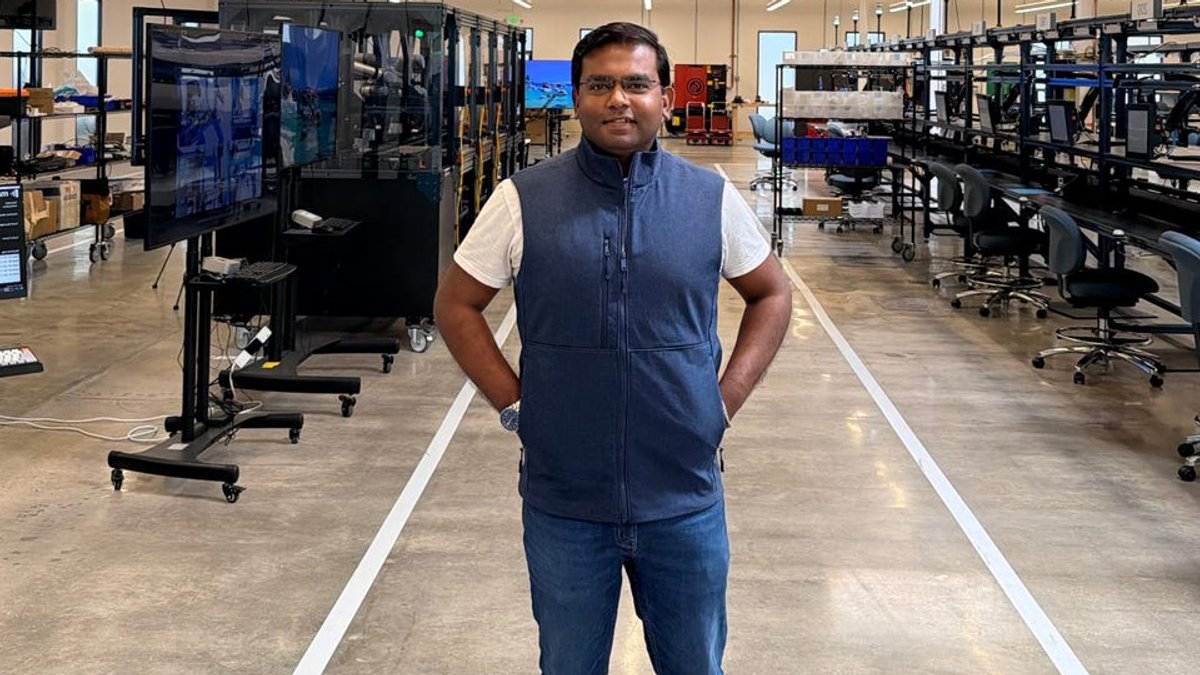
Adi Prasad didn’t plan to stay at Tesla or Uber long-term. He joined both to gain the skills needed to launch his own venture—and now leads an AI manufacturing startup in California.
From Tesla to CloudKitchens: Lessons from two industry leaders
Prasad, 35, earned a master’s in mechanical engineering from MIT in 2015. Tesla was the natural choice. The automaker wasn’t just producing vehicles; it was redesigning factory operations from scratch. He started there the same year, assigned to scale production of the Model X’s Falcon Wing doors, one of the company’s most demanding engineering tasks.
The technology wasn’t what left the biggest impression. It was Elon Musk’s problem-solving style. Prasad observed Musk dissect complex issues in real time, often without subject-matter experts present. Musk relied on first-principles thinking, challenging assumptions and rejecting conventional wisdom. That blend of technical knowledge and business intuition defined Tesla’s culture and influenced Prasad’s approach.
After a brief stint at Apple as a product quality manager, he received an offer from CloudKitchens, a delivery-only kitchen startup founded by former Uber CEO Travis Kalanick. The opportunity wasn’t just about the role—it was a chance to work with another founder who had transformed a global industry in under ten years.
At CloudKitchens, Prasad witnessed Kalanick’s scaling strategy up close. While not the most technical leader, Kalanick emphasized return on investment. Zero-based budgeting, strict prioritization, and persistence through resistance became key elements of his method. He once told Prasad that entrepreneurs accelerate the future—the further ahead you aim, the harder execution becomes, but the greater the potential reward.
Related: Meta exits climate group over natural gas use
That philosophy resonated. After earning an MBA from Harvard Business School in 2025, Prasad relocated to the Bay Area and founded Matter, an AI-driven manufacturing startup, with no safety net.
Launching autonomous factories
Matter aims to rebuild American manufacturing as a software problem, not a labor issue. The goal is to use AI to assemble complex products like drones and robotic systems in the US.
Prasad’s journey—from Tesla’s assembly lines to CloudKitchens’ kitchens—was intentional. He sought roles that would teach him how to scale operations, question industry norms, and turn bold ideas into tangible results.
One lesson stood out: starting a company rarely feels like the right time. Sometimes, you simply have to act. Another realization? AI is shifting the skills that matter most. While deep expertise remains valuable, the ability to combine real-world experience with decisive action in unfamiliar territory may be even more critical.


 Facebook
  YouTube
  Twitter / X
  Instagram

