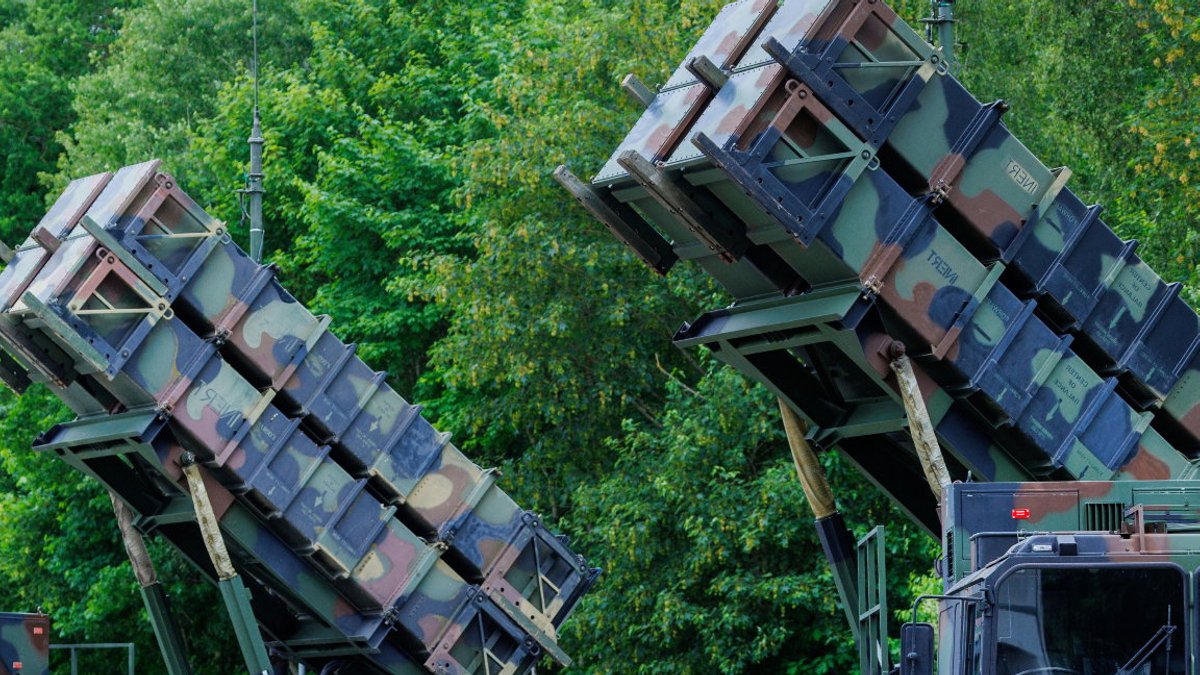
Poland has announced plans for a three‑way partnership with the United States and Ukraine to produce Patriot interceptor missiles, a move aimed at strengthening air‑defence capabilities amid heightened demand.
Polish officials outline the trilateral project
During a recent visit to Washington, Magdalena Sobkowiak‑Czarnecka, Poland’s deputy defence minister, presented a proposal to establish a joint production line for Patriot missiles. The plan calls for shared manufacturing of PAC‑3 interceptors, with a focus on keeping production sites out of range of Russian attacks. According to the agency PAP, the initiative is intended to meet the strong global demand for these systems.
In meetings with U.S. State Department officials and Pentagon representatives, Sobkowiak‑Czarnecka said deeper negotiations would begin soon. The discussions are expected to cover technology transfer, security protocols and the logistics of operating facilities in Ukraine. By positioning the factories in areas less vulnerable to artillery or air strikes, the partners aim to protect both the workforce and the critical equipment involved in missile assembly.
Poland’s role in maintenance and production
Poland’s defence minister, Władysław Kosiniak‑Kamysz, confirmed his country’s commitment to support Ukraine’s missile production and upkeep. He noted that Poland already participates in a multilateral agreement with Sweden, the Netherlands, Germany and the United States, which operates a European maintenance centre for Patriot missiles. This centre serves as a hub for refurbishing, testing, and extending the service life of interceptor stocks, ensuring that allied forces retain operational readiness across the continent.
Lockheed Martin, the U.S. contractor behind the Patriot system, has expressed willingness to share its technology following a licence granted to Ukraine earlier this year. Kosiniak‑Kamysz said that, as one of the four NATO allies permitted to provide technical assistance, Poland can help launch manufacturing in Ukraine relatively quickly. The licence, announced by the United States in the summer, opened the door for partner nations to convey proprietary design details and production techniques, thereby accelerating the domestic assembly of advanced interceptors.
Related: Oana Limostin on Setting Expectations to Retain Staff
The proposed collaboration would see PAC‑3 missiles produced under a technology‑transfer framework, allowing Ukrainian factories to assemble the interceptors domestically. Security concerns remain critical, and all sites would be positioned to avoid direct exposure to hostile fire.
While the exact production timeline has not been disclosed, officials indicated that the partnership could accelerate the delivery of missiles to Ukrainian forces, which have faced increasing aerial threats.
In the broader context, this effort reflects a deeper defence integration among NATO members and partner nations. By pooling resources and expertise, the three countries hope to create a more resilient supply chain that can adapt to evolving security challenges.
They aim to boost regional security.


 Facebook
  YouTube
  Twitter / X
  Instagram

