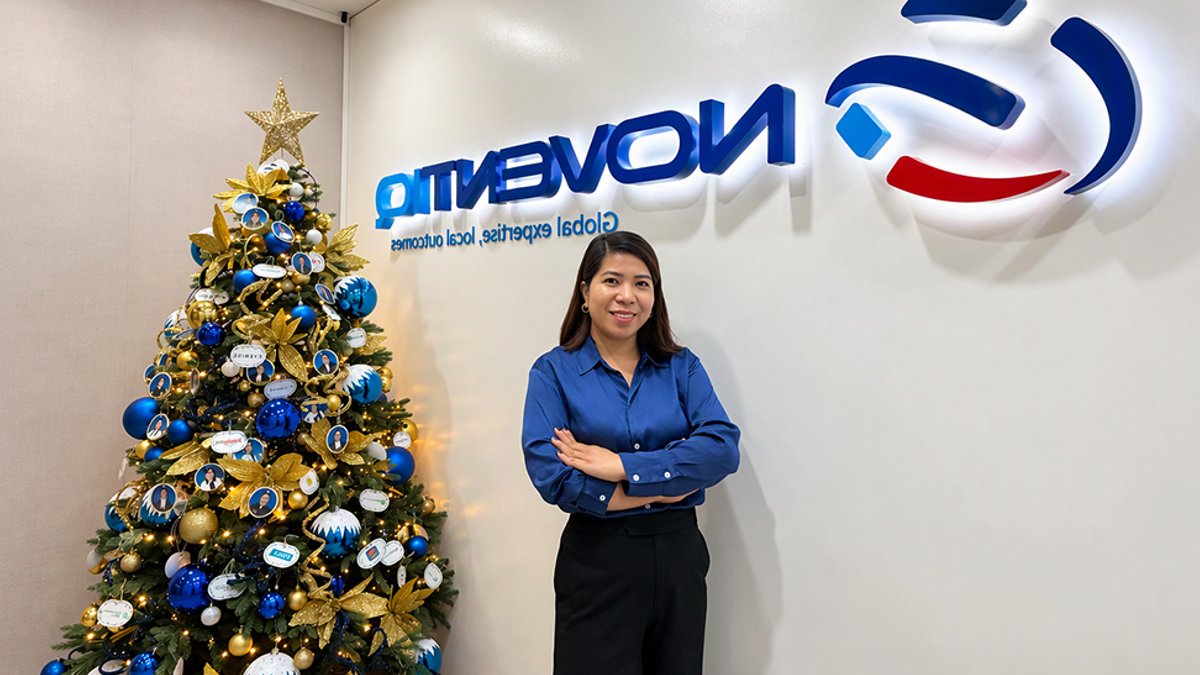
Enterprises are increasingly aware that merely installing artificial intelligence does not guarantee business impact. Leaders are urged to start with clear objectives, define human-AI roles and measure outcomes before scaling, according to a framework outlined by Lilibeth Tumbali, general manager of Noventiq Philippines.
Business need drives AI choice
Lilibeth Tumbali stated that before considering what AI can do, it is essential to be clear about what the business needs to do better. She stresses that adoption should stem from an honest assessment of current processes, not from a desire to follow a trend.
Companies are advised to pinpoint tasks that hinder efficiency, identify the data employees require, and decide which decisions remain human-centric. The goal is to improve work and customer service, not simply to add new technology.
Setting limits and defining roles
Once a need is identified, leaders must embed safeguards in the operating plan. Tumbali recommends deciding which data the AI can access, how privacy will be protected and who will maintain system performance.
She adds that clear boundaries help keep human oversight intact. Tumbali noted that people must retain authority to intervene, emphasizing that it is essential to be as clear about AI’s boundaries as its possibilities.
Defining the human-AI relationship involves training staff to interact with tools, recognize inconsistencies and know when to escalate issues. Employees should receive practical guidance and feel empowered to question outputs.
While many firms chase the hype, the real advantage lies in aligning technology with clear operational goals. A disciplined rollout reduces waste and builds trust across the organization.
Read Also: China Uses US AI Models to Train Domestic Rivals
Choosing a pilot project starts with a recognizable problem—such as a customer waiting for an answer or an employee repeating a routine task. The selected workflow should show visible improvement in daily work.
After implementation, businesses track metrics like turnaround time, service quality, cost per transaction or employee satisfaction. Tumbali advises recording the baseline performance before AI is introduced, then measuring change to decide on further expansion.
Tumbali said she would rather see one workflow deliver a measurable improvement than several pilots with no clear next step. Ownership of the pilot and data-driven decisions guide the scaling process.
Noventiq Philippines leverages global expertise to shape local outcomes. The firm adapts use cases from other markets to the Philippine context, equipping its sales, presales and delivery teams with best practices that meet international standards.
As part of its phased rollout, Noventiq plans to monitor turnaround time, service quality and employee satisfaction as it expands the AI workflow.
For Tumbali, the process of AI adoption involves six key steps. The first step is to make AI adoption a business decision, rather than just adopting technology for its own sake. This means taking the time to assess the current state of the business and identifying areas where AI can help improve efficiency and customer service.
Noventiq invests globally in expertise to help customers improve productivity and strengthen security in the AI era.


 Facebook
 YouTube
 Twitter / X
 Instagram


