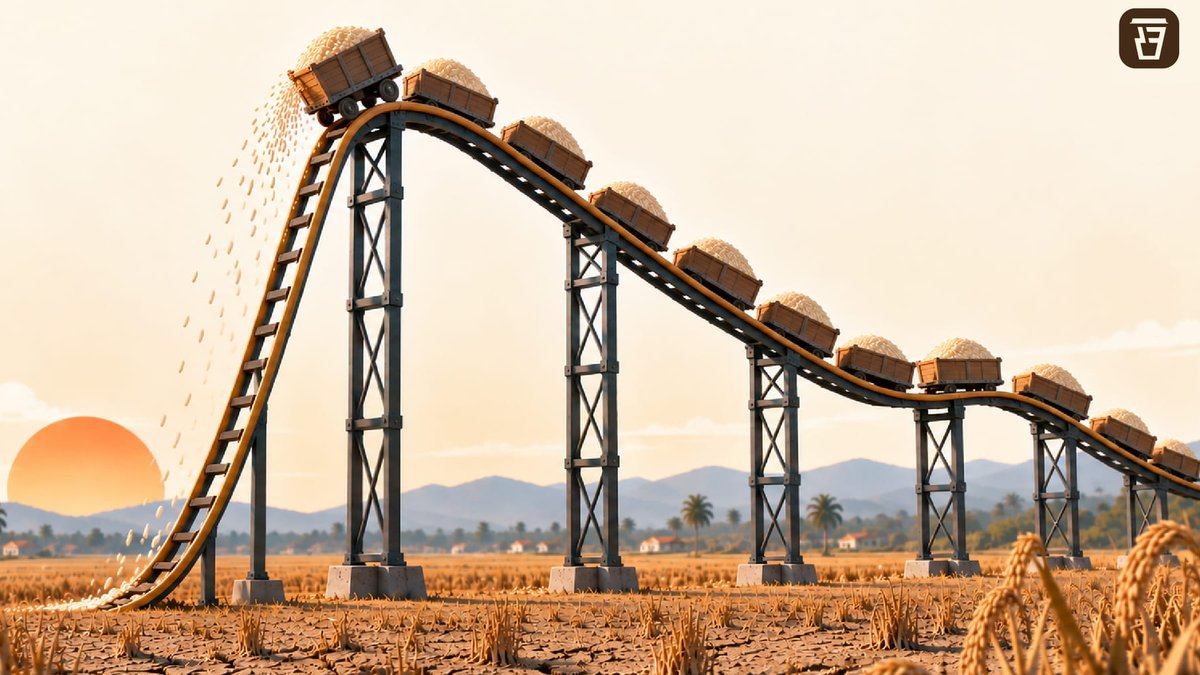
India’s rice output is facing its biggest decline since 2009, with production expected to fall to around 144 million tonnes. That would represent a drop of roughly 6.5 percent, or 10 million tonnes, from the previous year. The dip follows a pattern seen two decades ago, when a rainfall deficit caused output to slide by 15 to 18 percent. The decline is particularly concerning because India is the world’s largest rice producer, accounting for over a quarter of global output.
Why the Monsoon Matters
Rainfall data for the 2024 monsoon shows a cumulative deficit of 15 percent as of mid-September. The shortfall is even worse in key growing states like Uttar Pradesh and Jharkhand, where deficits reached 42 percent. El Niño conditions have weakened the monsoon, delaying the sowing of the Kharif rice crop. The delayed planting means less area was eventually cultivated. Lower sowing leads to smaller harvests, which can tighten domestic supplies. Non-basmati rice prices have already climbed more than 10 percent. With sugar, onions, and cooking oil also becoming more expensive, food inflation risks rising further.
The country has been a major source of global supply, pushing prices down by about 35 percent in 2023 after a previous export ban was lifted. A new production decline could reverse that trend, making Indian rice more expensive just as competitors like Thailand and Vietnam face their own price increases. India then targeted record rice shipments for FY26. That flood of supply helped push global rice prices down sharply, by roughly 35% from the previous year, as Indian exports returned alongside strong harvests in other Asian countries.
Despite the expected shortfall, the government holds a large buffer stock. The Food Corporation of India manages approximately 60 million tonnes of rice, stored in public warehouses. That’s roughly 5-6 times the amount it normally aims to maintain. This stock is meant to ensure food security and stabilize prices during shortages. However, not all of this stock is immediately usable.
A significant portion consists of unmilled paddy that requires processing. The government stock also contains a mix of varieties, including basmati, parboiled, and broken rice, which may not perfectly match market demand. Additionally, much of the stock is allocated to the public distribution system or used to produce ethanol for fuel blending. This creates a trade-off between domestic food security and managing fuel import costs.
This could reduce the area planted with winter rice, extending the pressure on supplies beyond the summer harvest. A rise in rice prices would directly affect poultry feed, as broken rice makes up 60 to 70 percent of feed costs. Higher feed prices could then drive up the cost of eggs, chicken, and dairy products, spreading inflation beyond the rice market itself.
Options for Mitigation
The government has a specific tool for this situation. It runs the Open Market Sale Scheme. Under this program, officials release rice into the market. Wholesalers, retailers, and state governments buy this stock. The goal is to increase supply and lower prices. To be effective, the government must release large amounts of rice. However, this is difficult to do. The stockpile contains many different types of rice. The market might need a specific variety that the government does not have in surplus. The government also purchases rice at a Minimum Support Price (MSP) every year to ensure farmers receive a minimum income, regardless of market fluctuations, further complicating the management of these vast reserves.


 Facebook
  YouTube
  Twitter / X
  Instagram

