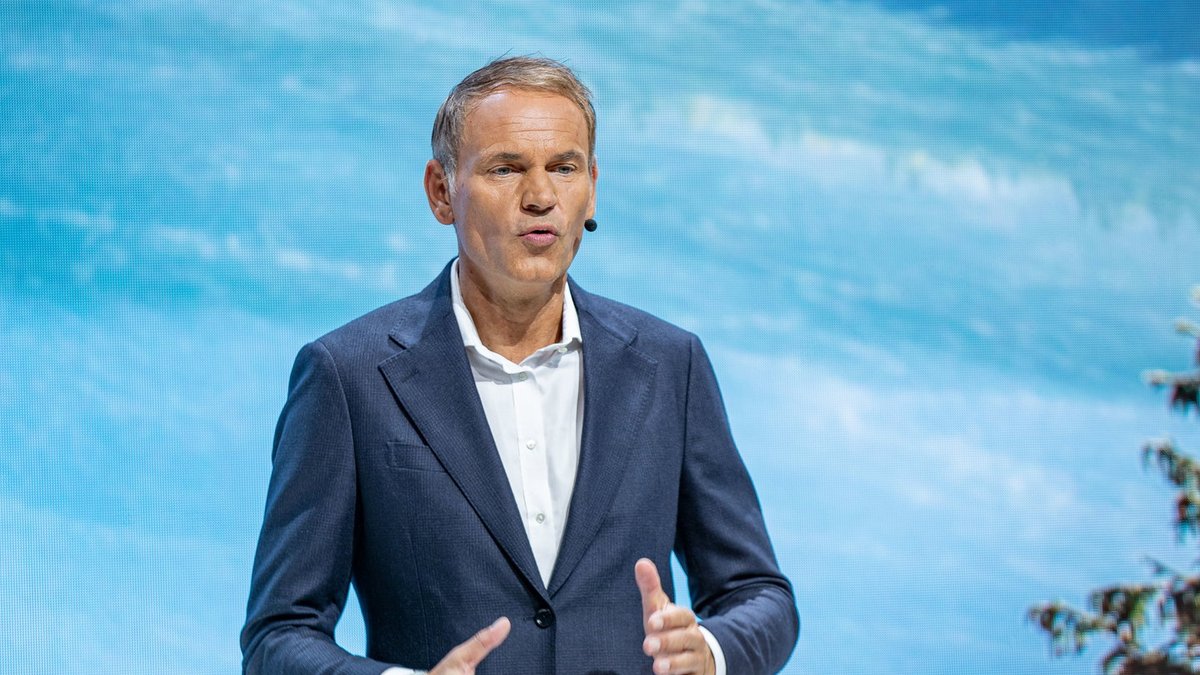
Volkswagen CEO Oliver Blume has called on the European Union to raise import tariffs on Chinese plug-in hybrid electric vehicles (PHEVs), warning that European automakers risk losing market share without swift action. His concerns reflect a broader industry anxiety as Chinese manufacturers increasingly dominate segments once led by established European brands. The shift is not merely a commercial threat but a strategic one, as PHEVs serve as a transitional technology for automakers handling the shift from internal combustion engines to fully electric vehicles.
Blume’s appeal comes as Volkswagen’s own Tiguan PHEV has slipped from first to fourth place in its segment over the past year. The decline is stark, with the model now trailing three Chinese competitors—the BYD Seal U, BYD Atto 2, and Jaecoo 7—which have rapidly gained traction among European consumers.
Chinese brands exploit tariff loopholes
Data shows Chinese automakers captured 28.3% of Europe’s PHEV market in the first half of 2026. While the EU imposes tariffs of up to 35% (plus a 10% base duty) on fully electric vehicles (BEVs), hybrids remain exempt, creating a regulatory loophole that Chinese manufacturers have exploited. The absence of duties on PHEVs has allowed them to price their vehicles competitively.
The trend mirrors developments in the UK, where the absence of hybrid tariffs has helped Chinese automakers sell 285,000 vehicles last year. In Europe, their total sales nearly doubled to 686,000 units, accounting for 9.5% of the market.
Blume argued that existing BEV tariffs had narrowed the price gap between European and Chinese brands—but that advantage is now being eroded by the flood of cheaper hybrids. The initial tariffs on BEVs were intended to protect European automakers as they scaled up electric vehicle production, but the unintended consequence has been a pivot by Chinese manufacturers toward PHEVs. This shift has forced European automakers into a difficult position: they must either accelerate their own PHEV development to compete on price or cede the segment entirely.
EU weighs new hybrid tariffs
The EU is reportedly considering new duties on Chinese PHEVs, though details on rates and timelines remain unclear. The deliberations are part of a broader reassessment of the EU’s trade policies, which have historically prioritized open markets but are now being tested by China’s state-backed industrial strategy. For European automakers, PHEVs are a critical tool for meeting strict emissions targets while maintaining profitability. The EU’s CO₂ regulations require automakers to reduce fleet-wide emissions by 55% by 2030, and PHEVs have emerged as a pragmatic solution for manufacturers struggling to sell enough BEVs to meet these targets. However, the influx of low-cost Chinese models threatens this balance.
Related: Syria rebuilds air force with new pilots
The proposed tariffs could take several forms, including a flat duty on all imported PHEVs or a tiered system based on battery capacity or price. Some policymakers have suggested aligning PHEV tariffs with those on BEVs, while others advocate for a more gradual approach to avoid disrupting supply chains. The challenge lies in balancing protection for European automakers with the risk of higher consumer prices, which could dampen demand for PHEVs at a time when the EU is pushing for faster adoption of electrified vehicles. Additionally, any new tariffs would need to account for the fact that Chinese automakers are already producing vehicles within the EU, complicating enforcement. Geely’s ownership of Volvo, for example, allows it to manufacture PHEVs in Belgium and Sweden, effectively bypassing import duties.
Volkswagen’s push for tariffs comes as the company faces internal challenges. Blume has proposed doubling planned job cuts to 100,000 employees, a move that reflects the financial strain of transitioning to electric vehicles while maintaining legacy operations. Meanwhile, Chinese rivals like Geely are sidestepping import duties by producing vehicles at existing European plants, including those owned by Volvo and Ford.
They have already proven adept at adapting to trade barriers—and their cost advantage may persist even if new duties are imposed. Chinese automakers have a history of handling regulatory hurdles, from localizing production to forming joint ventures with European partners.
For now, the EU’s next move could shape the future of Europe’s hybrid market. A decision to impose tariffs would provide temporary relief for domestic automakers but could also accelerate Chinese investment in European production facilities, further entrenching their presence in the market. Conversely, inaction risks allowing Chinese brands to consolidate their dominance in the PHEV segment, potentially forcing European automakers to retreat from a technology that has been central to their emissions compliance strategies. The stakes extend beyond commercial competition; they touch on the EU’s broader industrial policy and its ability to maintain a competitive automotive sector in the face of state-backed foreign rivals.
But with Chinese automakers expanding rapidly, tariffs alone may not be enough to protect domestic manufacturers. The challenge for European automakers is not just to match Chinese prices but to differentiate their products through innovation, quality, and brand loyalty. Volkswagen’s Tiguan PHEV, for example, has struggled not only because of its higher price but also because Chinese competitors have closed the gap in features. To regain ground, European automakers will need to accelerate their own technological advancements while also addressing the cost structures that have left them vulnerable to price competition.


 Facebook
  YouTube
  Twitter / X
  Instagram
