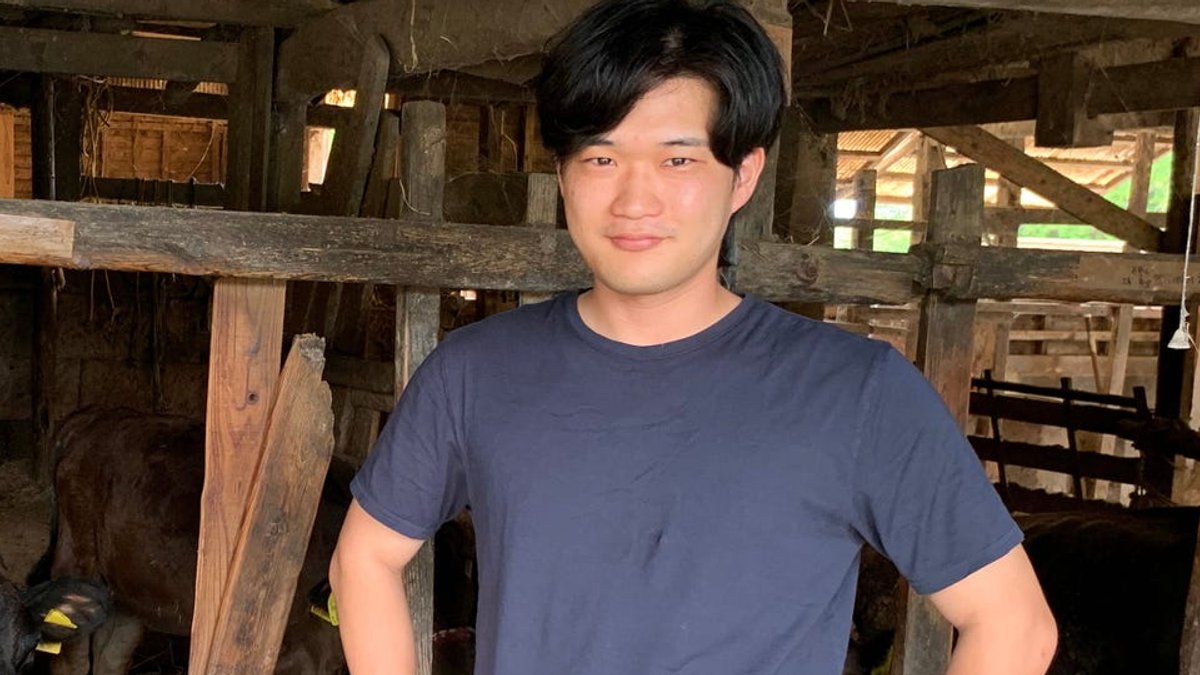
Masashi Nakamura didn’t set out to become a farmer. At 29, he now manages a small Wagyu cattle operation in Kagoshima Prefecture, Japan—a change in direction that started with a single word on a beef carcass in Tasmania.
From IT to cattle feed
Nakamura grew up near Osaka, surrounded by rice paddies. After earning a degree in English, he worked as an IT engineer in the city, monitoring servers. Two years later, he relocated to Vancouver to study web development but left the program after deciding the field wasn’t a good fit.
His next move took him to Australia, where he worked at a meat processing plant. There, he saw “Wagyu” stamped on hanging beef. The label stood out because, while common in Japan, it carried prestige abroad. That moment changed his perspective.
“I realized Wagyu wasn’t just meat,” he said. “It represented something deeper in Japan and held value worldwide.”
Related: Investors blame missteps at Selena Gomez startup
A family farm’s future
In late 2025, Nakamura returned to Japan to take over his grandfather’s aging Wagyu farm in Satsuma, Kagoshima Prefecture. His grandparents, no longer able to run it, had planned to sell the remaining cattle.
His grandfather was surprised by the decision, concerned farming wouldn’t provide financial security. Still, he supported it, and Nakamura took charge of daily operations. He used savings from his IT career to cover renovations, feed, and licensing costs.
Mornings start at 6 a.m. with feeding and cleaning. The work is physically taxing, and earnings—less than half his IT salary—come from part-time jobs at an artificial insemination center and a nearby Wagyu farm. He also supplements income through online donations and Instagram subscriptions, where he shares farm life updates.
The responsibility never stops. “When animals depend on you, there’s no real day off,” he said. The stress differs from his IT days. “Office work was mentally draining. Farming is physically and financially demanding.”
Related: House of the Dragon showrunner talks season three finale
His immediate goal is preserving the farm while his grandfather is alive. “This isn’t something I’d learn behind a screen,” he said. “I want to build something lasting, not just chase profits.”
He still applies his IT skills, handling social media for the farm where he works part-time. Combining tradition with technology, he believes, could help in an industry where many struggle.
Nakamura’s experience mirrors a trend in rural Japan, where younger people are returning to agriculture—not out of duty, but by choice. The work is tougher than office jobs, pay is lower, and the future unclear. For some, the exchange is worthwhile.


 Facebook
  YouTube
  Twitter / X
  Instagram
